


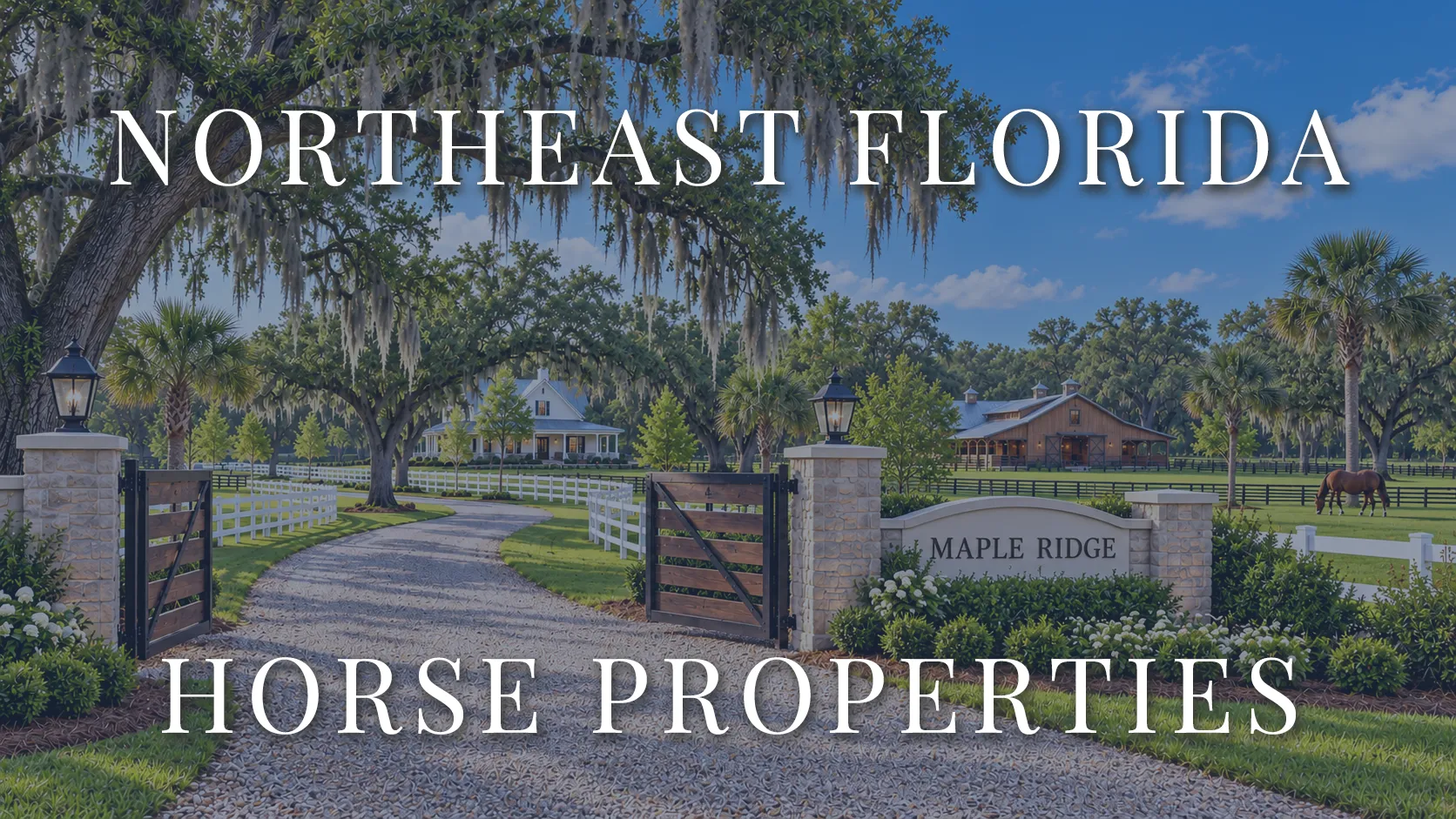
Horse Farm Property Options in Northeast Florida
Northeast Florida Horse Farm Property Options
For buyers searching for horse farm property options in Northeast Florida, the right home is about much more than acreage. It is about finding a property that supports the way you and your horses live—whether that means room for a small private barn, established pasture, a riding arena, direct access to trails, or simply the privacy and freedom that come with country living.
From established equestrian communities to rural acreage and custom estate properties, Northeast Florida offers a wide range of opportunities for horse owners, riders, hobby farmers, and buyers who simply want more space. Michelle Mousin-Anderson, PA brings personal horse ownership experience and decades of Northeast Florida real estate knowledge to help buyers evaluate both the home and the land behind it.
Types of Horse Properties Available in Northeast Florida
Horse properties are not one-size-fits-all. Your ideal property may depend on the number of horses you own, your riding discipline, whether you plan to board horses, and how much land and maintenance you want to manage.
Acreage Homes with Room for Horses
Some buyers are looking for a comfortable home on several acres with enough usable land for horses, gardens, chickens, RV storage, or simply more privacy. These properties may already include fencing, a barn, shed, paddocks, or other improvements—or they may offer a blank canvas for your plans.
Established Equestrian Communities
For buyers who value an equestrian setting along with neighborhood structure, established communities can be an appealing option. Whitelock Farms in St. Johns, for example, offers acreage homesites in an equestrian environment with community riding areas and shared open space.
Other communities and neighborhoods often considered by horse-property buyers include Quail Ridge Farms, Jacksonville Ranch Club I and II, Foxmeadow and Equestrian Estates. Each property should be evaluated individually for its acreage, improvements, HOA requirements, and current horsekeeping rules.
Custom Equestrian Estates
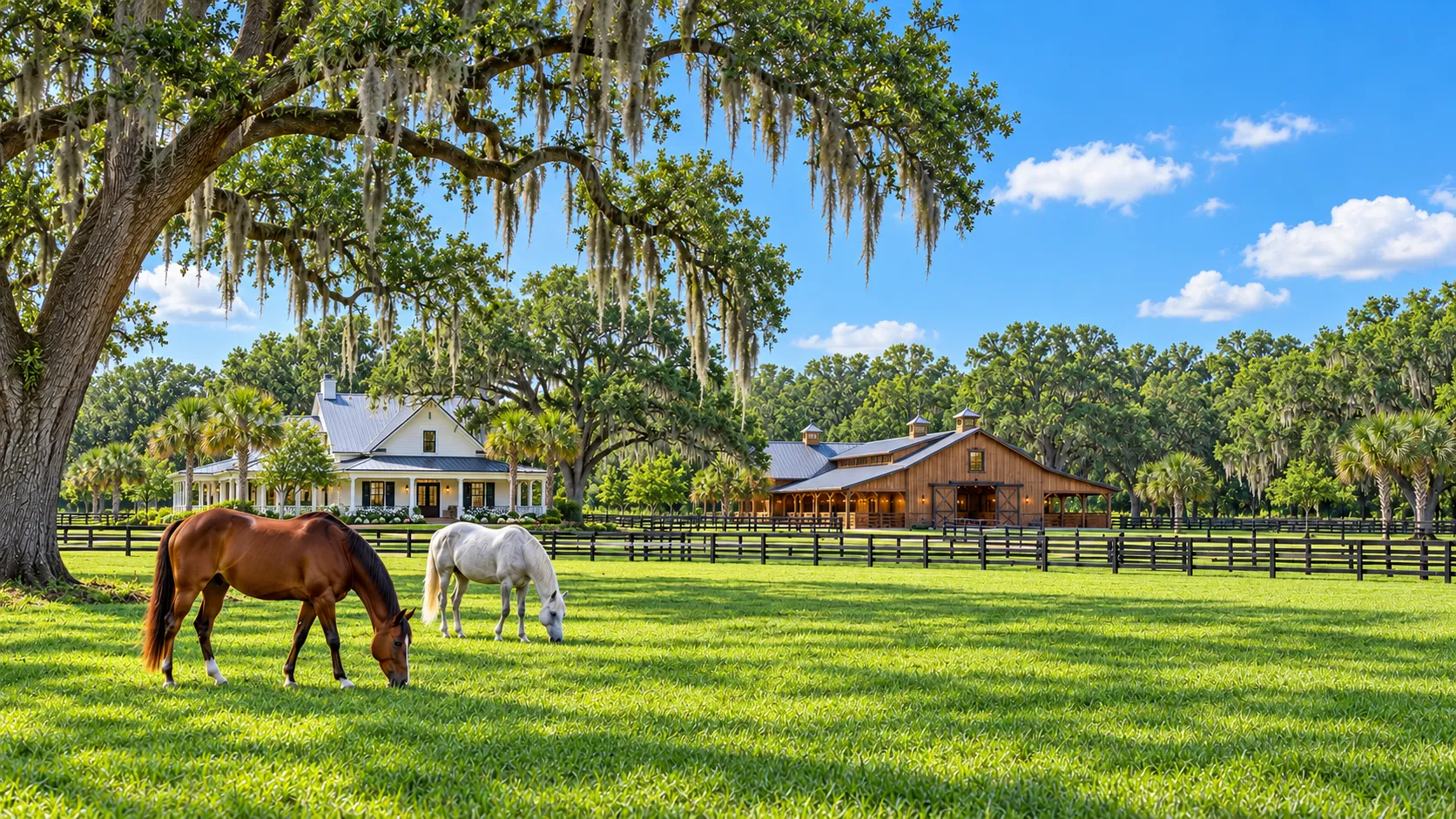
Higher-end horse farms may include features such as a multi-stall barn, tack room, wash area, riding ring, training arena, turnout paddocks, gated entry, guest accommodations, and a custom residence. These properties can work well for serious riders, multi-horse households, or buyers seeking an estate-style lifestyle with room to grow.
Homes with Existing Barns and Pastures
An existing barn, fencing, and pasture can save time and provide immediate functionality—but buyers should still inspect every improvement carefully. Barn condition, stall layout, drainage, fencing, footing, water access, electrical service, and permitted structures all matter when evaluating a horse property.
Land for a Future Horse Farm
For some buyers, purchasing land and creating a custom horse property is the best fit. This route can offer flexibility, but it also requires careful review of zoning, permitted uses, setbacks, flood considerations, access, utilities, septic or well requirements, and the cost of future improvements.
Horse Property Areas in Northeast Florida
Northeast Florida horse properties can be found across a broad geographic area. Buyers often begin their search in St. Johns County, Clay County, Nassau County, and western portions of Duval County, then expand based on acreage needs, budget, commute preferences, and the type of equestrian setup they want.
Popular horse property areas include:
-
- St. Johns and northwest St. Johns County
- County Road 210 and surrounding areas
- Hastings and Elkton
- Middleburg and Lake Asbury
- Green Cove Springs and Keystone Heights
- Callahan, Hilliard, Bryceville, and Yulee
- Rural west Jacksonville
Each area offers a different mix of acreage, convenience, rural character, and proximity to Jacksonville, St. Augustine, Ponte Vedra, and the Beaches. Michelle can help narrow the search based on your lifestyle, horses, desired amenities, and preferred location.
What to Look for When Buying a Horse Property
A beautiful home is important, but horse-property buyers need to look beyond the house. Before making an offer, consider the practical details that affect daily use, safety, expenses, and long-term value.
-
- Usable acreage: Consider the layout of the land—not just the total acreage shown on a listing.
- Zoning and restrictions: Confirm permitted uses, animal limits, HOA requirements, and any restrictions affecting barns, fencing, trailers, or riding areas.
- Fencing and pasture condition: Inspect fencing, gates, drainage, shade, grazing areas, and the overall condition of the land.
- Barn and facility features: Review stalls, tack storage, wash areas, feed storage, ventilation, electricity, water access, and maintenance needs.
- Drainage and flood considerations: Understand how the property handles Florida rain and whether insurance or flood-zone considerations may apply.
- Location and access: Think about trailer access, nearby feed stores, veterinary care, riding opportunities, and your commute to work, schools, beaches, or city conveniences.
Frequently Asked Questions About Northeast Florida Horse Properties
What is the difference between a horse property and a regular home on acreage?
A horse property may include existing improvements such as barns, stalls, fenced pastures, paddocks, arenas, trailer access, or other features designed for horses. A regular home on acreage may have potential for horses, but buyers should confirm zoning, restrictions, usable land, and improvement requirements.
Can I keep horses in any home with acreage?
Not necessarily. Horsekeeping rules can vary by county, zoning designation, neighborhood, HOA, and individual property. Always confirm the current requirements before purchasing.
How much acreage do I need for horses?
The answer depends on the number of horses, how the land will be used, local requirements, pasture management, and whether you plan to supplement with hay or use dry lots. Michelle can help you identify properties that fit your particular needs, while the appropriate professionals can advise on land-use and management questions.
Should I buy a property with an existing barn or build one later?
Both can be good options. An existing barn may provide immediate functionality, while a property without improvements may allow you to design the setup around your own needs. The best choice depends on condition, cost, timing, zoning, and your long-term plans.
What Florida plants should horse-property buyers watch for?
Florida pastures, fence lines, and landscaping can contain plants that are harmful to horses. Before purchasing, inspect the property for unfamiliar weeds, shrubs, and trees, especially in grazing areas and around barns. Common concerns can include creeping indigo, lantana, nightshade, milkweed, pokeweed, and certain ornamental plants. A local veterinarian, pasture professional, or UF/IFAS Extension office can help identify questionable plants and recommend next steps.
Why is pasture management especially important in Florida?
Florida’s warm, wet climate can support rapid grass growth, but it can also encourage weeds, invasive plants, and drainage issues. Healthy pasture management may include soil testing, appropriate fertilization, mowing, rotational grazing, weed control, and regular inspection of fence lines and low-lying areas. Buyers should look beyond the total acreage and evaluate how much of the land is usable for their horses.
Are predators a concern for horses in Northeast Florida?
Wildlife activity can vary widely by location. Coyotes, bobcats, black bears, and other wildlife may be present in rural and wooded areas, while Florida panther sightings are far less common in Northeast Florida than in South Florida. Adult horses are generally not the primary concern, but smaller animals, foals, feed, and unsecured livestock areas may need added attention. Buyers should ask about local wildlife activity and evaluate fencing, lighting, shelter, and secure storage options.
How can I help protect horses and other animals from wildlife?
Practical precautions may include maintaining secure fencing and gates, bringing feed containers inside or storing them in a secure structure, removing fallen fruit and other attractants, keeping brush trimmed near barns and pens, and using motion-activated lighting where appropriate. The right approach depends on the property, its location, the animals kept there, and current wildlife activity.
Should I inspect the fencing before buying a horse property?
Absolutely. Inspect the type, condition, height, visibility, gates, posts, and perimeter layout of all fencing. Buyers should also consider whether the fencing works for their particular horses and whether it safely separates pastures, driveways, neighboring properties, ponds, wooded areas, and other potential hazards.
What should I know about ponds, wetlands, and drainage?
Water features and low-lying areas can add beauty to a property, but they should be evaluated carefully. Consider drainage after heavy rain, access to dry turnout areas, fencing around ponds or ditches, flood-zone information, and whether wetlands or easements affect where future barns, arenas, fencing, or other improvements can be placed.
Can I add a barn, arena, or additional fencing after purchasing?
Possibly, but buyers should confirm the requirements before making plans. County zoning, setbacks, permits, HOA restrictions, easements, drainage, wetlands, and utility locations can all affect what may be added to a property. It is wise to review these details during due diligence rather than assuming future improvements will be permitted.
What should I ask about before buying a horse property with a well or septic system?
Ask about the age, maintenance history, capacity, permits, and inspection records for both the well and septic system. Consider the needs of the household as well as water use for horses, wash areas, irrigation, and pasture care. A qualified inspection professional can help identify issues before closing.
For additional guidance, review the University of Florida IFAS Extension resource on common toxic plants for Florida horse owners.
Why Work with Michelle Mousin-Anderson, PA?
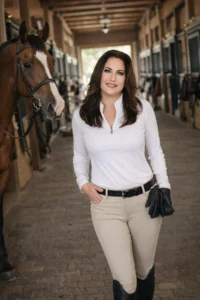
Buying or selling a horse property requires a different level of attention than a typical residential transaction. Michelle understands that the barn, paddocks, arena, fencing, pasture, drainage, land layout, and access can be just as important as the home itself.
Michelle’s connection to the horse world began in Saratoga Springs, New York, and continued when she moved to Ocala, Florida—one of the country’s best-known Thoroughbred centers and home of the Florida Thoroughbred Breeders’ and Owners’ Association. In Ocala, she worked with Thoroughbred farms and gained firsthand experience with the business and lifestyle behind equestrian properties.
Her equestrian background includes:
-
- Serving as Executive Secretary for the Florida Thoroughbred Breeders’ and Owners’ Association under George Steinbrenner III
- Handling insurance, sales, and race-entry responsibilities for notable Thoroughbred farms
- Experience working with Thoroughbred operations including Warnerton, Silverleaf, and Jigsaw Lane farms
- A firsthand understanding of the needs that can shape a horse-property decision—from usable acreage and fencing to barns, turnout areas, and riding facilities
Whether you are looking for a small acreage home, a private horse farm, or a full equestrian estate, Michelle provides personalized guidance to help you compare properties, ask the right questions, evaluate how a property fits your goals, and stay informed as new opportunities become available.
The Advantage of Working with Michelle Mousin-Anderson, PA—REALTOR® with Christie’s International Real Estate First Coast
Buying or selling a horse property in Northeast Florida requires a plan that considers far more than the home itself. Michelle combines decades of local real estate experience with personal horse ownership knowledge to help clients evaluate the property, land, amenities, location, and lifestyle behind every opportunity.
-
- Horse-property perspective: Consider the home alongside usable acreage, fencing, barns, paddocks, arenas, pasture condition, access, and other equestrian features.
- Guidance for out-of-town buyers: Help relocating buyers understand Florida-specific considerations, including pasture management, drainage, wetlands, wildlife, zoning, and horsekeeping requirements.
- Thoughtful property comparisons: Compare acreage, improvements, layout, condition, location, and long-term potential—not simply square footage and bedroom count.
- Property-focused marketing: Present the home, land, barn, outdoor living areas, and equestrian lifestyle in a way that helps the right buyers see the full value of the property.
- Attention to important details: Identify questions about surveys, zoning, HOA documents, fencing, permitted uses, wells, septic systems, and future improvements for review with the appropriate professionals.
- A plan built around your goals: Discuss pricing, timing, property search strategy, showing arrangements, negotiations, and the next steps that support your move.
Review Michelle’s background and request a private consultation to discuss your Northeast Florida horse-property goals.
Northeast Florida Map
Horse Properties For Sale in Northeast, Florida Market Report
Ready to Explore Northeast Florida Horse Properties?
Let’s explore Northeast Florida horse property options that fit your lifestyle, horses, and long-term goals. Whether you are relocating to Florida, seeking acreage, or searching for an established equestrian setting, Michelle is here to provide personalized, concierge-level guidance every step of the way.